The shalwar kameez for women is more than a national dress—it's a wardrobe system that adapts to your climate, your calendar and your shape. If you're shopping from the UK, USA or Canada, understanding how fit, fabric and styling work together means you'll choose pieces that actually suit your life, not just look good in a photograph.
This guide moves past the basics. We'll show you how shalwar width changes your silhouette, which fabrics work in humid summers versus dry winters, and how to style the same three-piece suit for a work meeting, a family lunch and a semi-formal dinner. Whether you prefer unstitched fabric you can tailor to your measurements or ready-to-wear convenience, you'll know exactly what to look for.
Why Shalwar Kameez Fit Matters More Than You Think
Fit isn't just about measurements—it's about proportion. A kameez that skims your hips will look entirely different paired with a wide, gathered shalwar versus a slim cigarette pant. The dupatta adds a third layer: draped over one shoulder it elongates; pinned across both it frames.
Most diaspora shoppers struggle with three things: kameez length (too short feels awkward, too long overwhelms petite frames), shalwar taper (baggy ankles date a modern outfit), and dupatta weight (a heavy chiffon dupatta slides off; a stiff organza one sits where you pin it). If you're ordering unstitched suits, you control all three. Ready-to-wear means checking the size chart for hip, bust and kameez length—not just one number.
Shalwar width affects how you move. A traditional Patiala or Balochi-style shalwar gives volume and drama; a straight-cut trouser shalwar works under a shorter, tunic-style kameez for office wear. Neither is right or wrong—they simply serve different occasions and body types.
Fabric Choices: Lawn, Chiffon, Khaddar, and When to Wear Each
Fabric dictates season, formality and care. Here's what works where, based on the Pakistani fashion calendar and real climates.
Lawn (Spring & Summer)
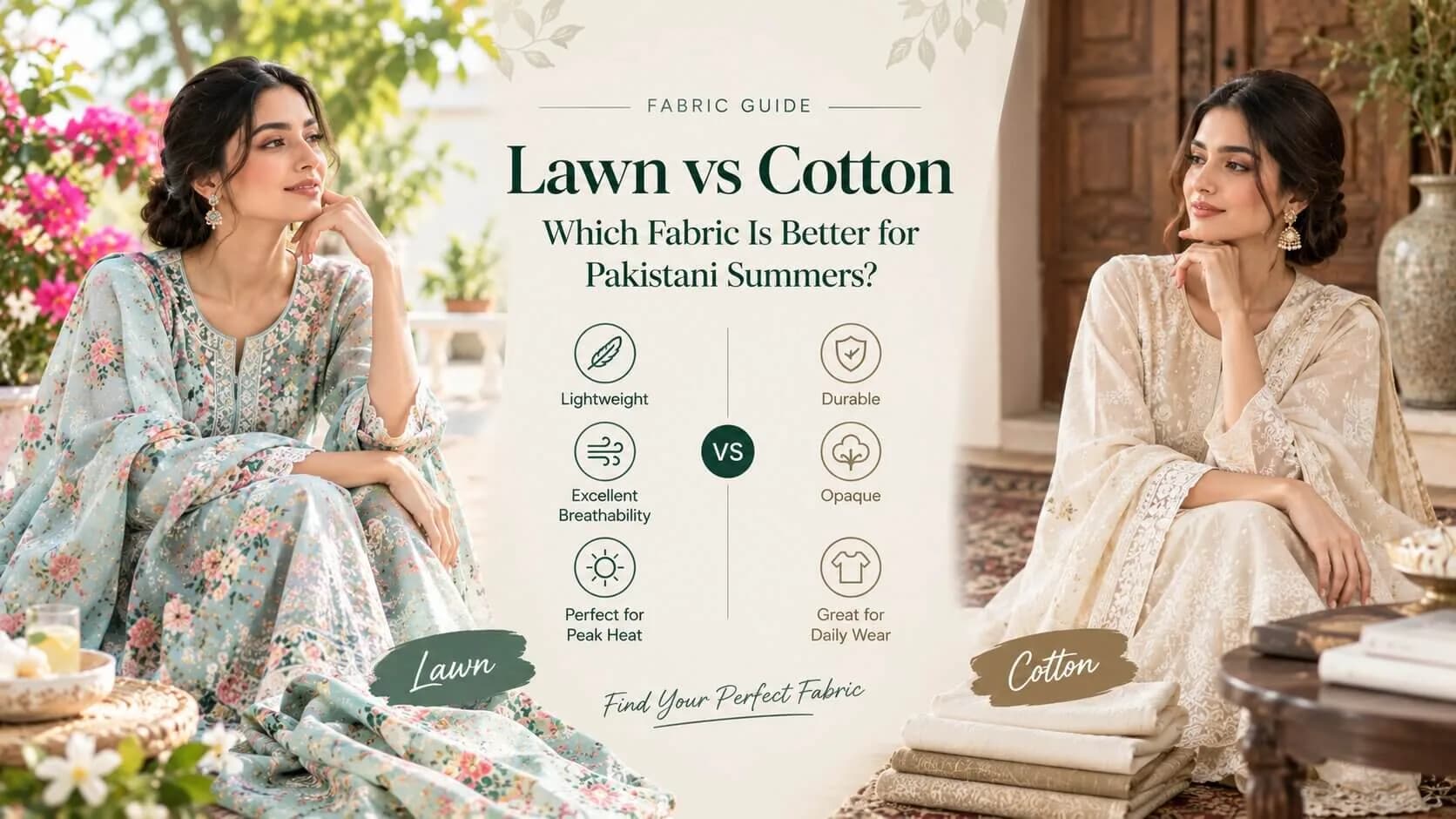
Lawn is fine, breathable cotton—ideal for humid heat from March to September. It takes digital prints beautifully, which is why most lawn collections are vibrant and detailed. Lawn suits work for daytime events, office wear and casual family gatherings. They wrinkle easily, so iron after every wash. A three-piece lawn suit with a chiffon or cotton dupatta is the summer workhorse.
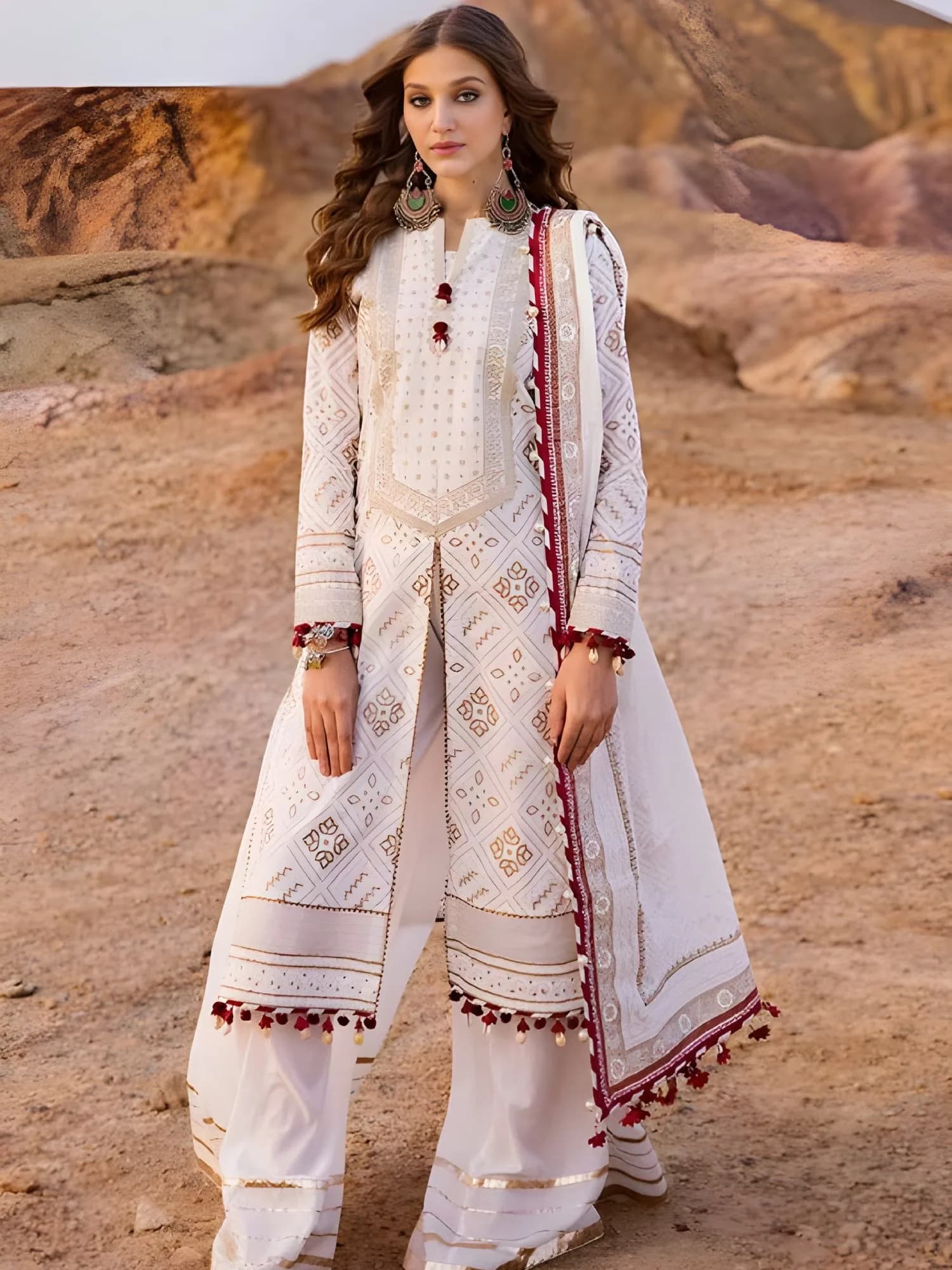
Gul Ahmed
Chunri Festive 3-piece Embroidered Gold & Lacquer Printed Lawn Suit CL-42074
Lawn
Rs. 6,558Rs. 8,198
Chiffon (Formal & Festive, Year-Round)
Chiffon is sheer, lightweight and drapes softly—used mostly for dupattas and occasionally for kameez overlays. It elevates a simple suit into semi-formal territory. Chiffon needs gentle handling: hand-wash or dry-clean, and store flat to avoid snags. Pair a printed lawn kameez with an embroidered chiffon dupatta for an instant upgrade.
Khaddar (Autumn & Winter)
Khaddar is a medium-weight cotton with a slightly coarse texture—warm without being heavy. It's the fabric of choice from October to February in Pakistan, and it works beautifully in cooler diaspora climates (UK autumn, Canadian spring). Khaddar suits often feature digital prints or light embroidery. They hold their shape well and soften with each wash.
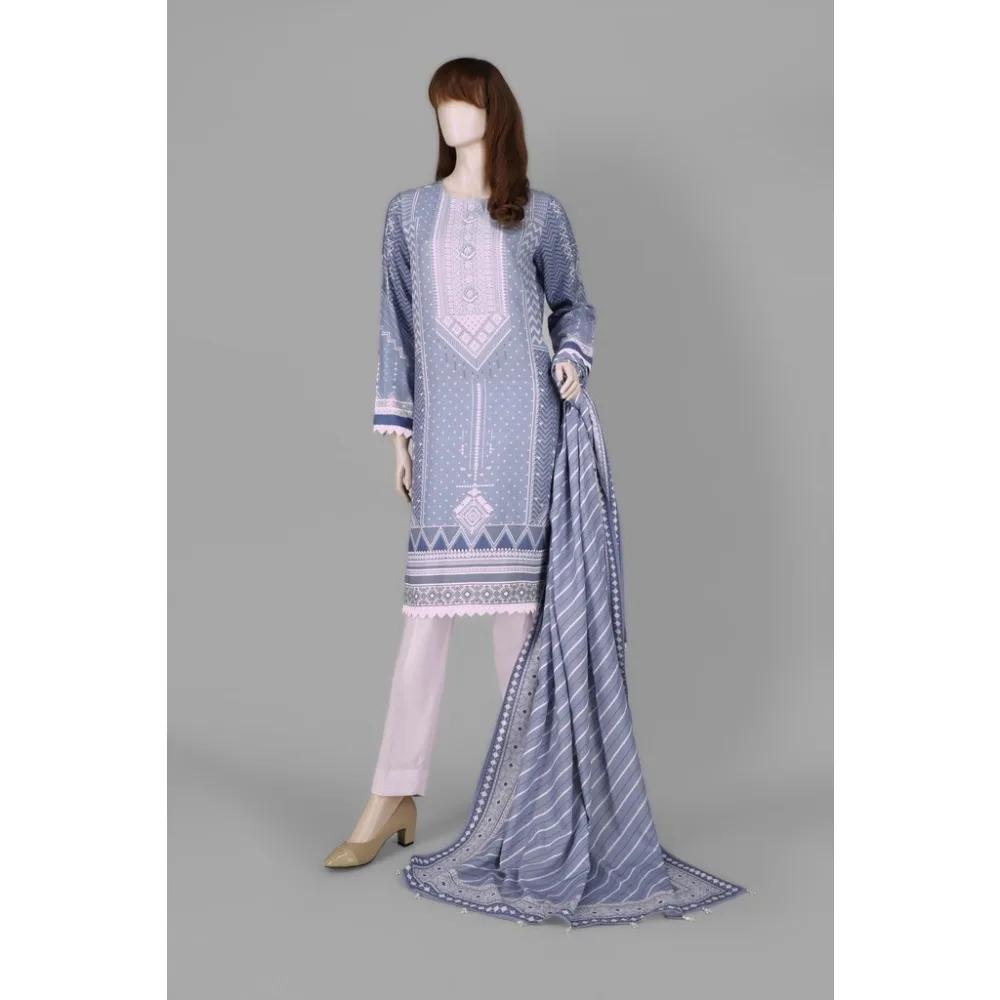
Karandi, Linen & Velvet (Winter Formals)
Karandi is a wool-blend twill—structured, warm, and ideal for tailored winter suits. Linen blends (cotton-linen) offer a crisp, textured finish for smarter casual wear. Velvet is reserved for evening events and weddings: rich, heavy, and best worn in true winter. All three need dry-cleaning or careful hand-washing to avoid shrinkage.
Understanding Shalwar Width, Length and Dupatta Drape
Shalwar styles range from voluminous to streamlined. A classic shalwar has a wide leg and gathers at the waist; a cigarette pant or straight trouser is narrow from hip to ankle. Taller frames carry wide shalwar well; petite women often prefer a tapered or straight cut to avoid shortening the leg line.
Kameez length matters too. A knee-length kameez suits most occasions and body types. Longer kameez (mid-calf or ankle) work for formal events but can overwhelm if you're under 5'3". Shorter, tunic-length kameez (hip or upper-thigh) pair best with straight trousers and look modern for work.
Dupatta drape changes the entire look. Over one shoulder (pallu trailing) feels relaxed and traditional. Across both shoulders, pinned at the chest, reads formal. Draped around the neck like a scarf suits office environments in the diaspora. A two-piece suit (kameez and shalwar, no dupatta) is the practical choice for everyday wear; add the dupatta when the occasion calls for it.
Styling for Work, Casual, and Semi-Formal Occasions
Work & Office Wear
Choose a simple printed or solid lawn or linen suit in muted tones—navy, grey, olive, soft pastels. Pair a knee-length kameez with a straight-cut trouser shalwar. Skip the dupatta or drape it like a scarf. Avoid heavy embroidery, loud prints or metallics. Iron well. This is where unstitched fabric shines: you can request a modest neckline, three-quarter sleeves and a professional length.
Casual & Family Events
Printed lawn, khaddar or cotton suits in brighter colours work beautifully. You can wear the dupatta loosely or skip it entirely. A two-piece suit with simple embroidery on the neckline or sleeves feels relaxed but put-together. Flats or low heels complete the look.
Semi-Formal & Festive
Add embroidery, a chiffon or organza dupatta, and richer fabrics—velvet, jacquard, or embroidered lawn. A longer kameez (knee to mid-calf), a gathered shalwar or palazzo-style trouser, and a statement dupatta drape (pinned or trailing) lift the formality. Metallic prints, sequins or zari threadwork signal celebration. Heels, jewellery and a clutch finish the outfit.
Unstitched vs. Ready-to-Wear vs. Custom Stitching: Which Suits You
Unstitched: You receive fabric (usually three pieces: kameez, shalwar, dupatta) and take it to a tailor. This gives you complete control over fit, neckline, sleeve length and shalwar style. It's the best option if you're between standard sizes, have specific style preferences, or want a modest, professional cut. Turnaround depends on your tailor—allow two to four weeks.
Ready-to-wear: The suit arrives stitched to a standard size chart. Faster and more convenient, but fit is less predictable if your proportions don't match the brand's template. Check bust, hip and length measurements, not just S/M/L labels. Some retailers offer minor alterations.
Custom stitching (stitched-to-order): You provide your measurements, and the retailer stitches the suit before shipping. This bridges unstitched control and ready-to-wear speed. Askani Group offers this service—ideal for diaspora customers who don't have access to a trusted tailor locally.
Sizing Guide for UK, USA, Canada Shoppers
Pakistani brands typically use UK/European sizing, but there's no universal standard. Always check the specific brand's size chart and compare your actual body measurements—not the size you wear in Zara or H&M.
What to measure:
- Bust: fullest part of your chest, tape parallel to the floor
- Waist: natural waistline, usually just above your navel
- Hips: fullest part of your hips and seat
- Kameez length: shoulder to desired hem (knee, mid-calf, or ankle)
- Sleeve length: shoulder point to wrist
- Shalwar length: waist to ankle
If you're ordering unstitched fabric, send these measurements to your tailor. If buying ready-to-wear, compare them to the product page chart. Many UK and North American customers find Pakistani "Medium" runs smaller than a UK 12 or US 8—always size up if you're between measurements.
Care and Storage to Keep Your Investment Looking New
Lawn, chiffon and embroidered suits need gentle care. Hand-wash in cold water with mild detergent, or dry-clean if heavily embroidered. Never wring chiffon—roll it in a towel to remove excess water, then air-dry flat. Iron lawn and khaddar on medium heat while slightly damp for a crisp finish. Store suits in breathable cotton garment bags, not plastic, to prevent yellowing and fabric stress.
Velvet and karandi should be dry-cleaned. Hang velvet suits to avoid crushing the pile; fold khaddar and lawn to save wardrobe space. Keep dupattas separate—chiffon snags easily on zips and hooks.
If you're storing suits long-term (between seasons or events), wrap them in unbleached muslin and add silica gel sachets to control humidity. This is especially important in damp UK or coastal North American climates.
Shop Shalwar Kameez with Confidence
Understanding fit, fabric and styling transforms how you shop for shalwar kameez. You'll know whether a printed lawn suit will survive your city's summer, whether a wide shalwar flatters your frame, and whether unstitched or ready-to-wear suits your schedule and access to tailoring.
Askani Group ships original Pakistani designer and everyday wear—unstitched fabric, ready-to-wear and custom stitching to your measurements—across Pakistan and internationally to the UK, USA, Canada, UAE and beyond. Browse our lawn, khaddar and winter collections, or explore our custom stitching service to get the exact fit you need, wherever you are.