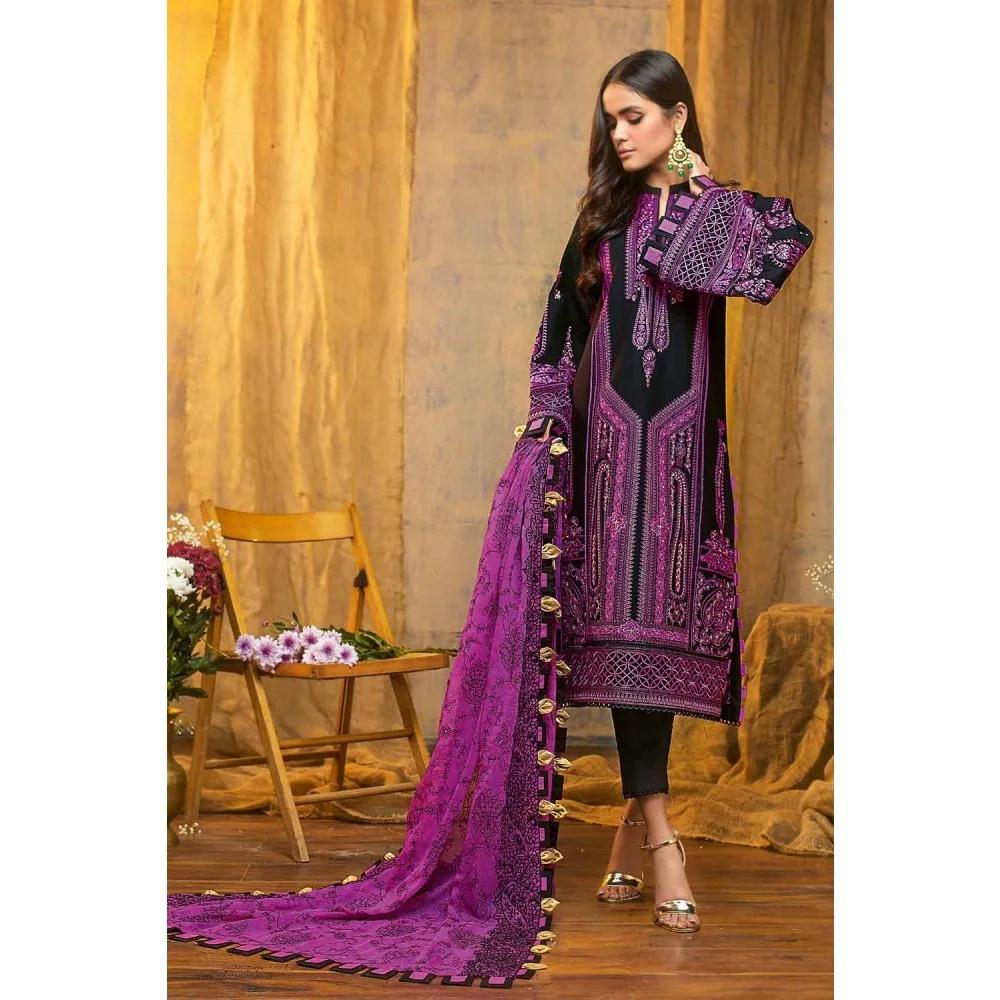

The best Pakistani evening wear for winter is a mid-weight formal suit in velvet or raw silk for cold, drafty venues, and chiffon or organza for heated halls, with a good shawl on top. Choose the fabric by where the event is held, not only by the date on the invitation.
November to February is busy: dinners, mehndis, receptions. Google Keyword Planner shows searches for this group of terms (pakistani evening wear, formal wear, formal dresses) rising about 21%, which fits what any shopper feels at this time of year. The real puzzle is simple: you want to look formal, not bundled up, and you do not want to be sweating once the hall fills with people.
What counts as evening wear at Pakistani winter events
Evening wear sits one step above daytime festive wear. Think embellished shirt, matching trouser or sharara, and a dupatta with some weight or shine. Pakistani formal wear usually means heavier embroidery, richer fabric and a fuller dupatta. Semi-formal, which many shoppers also search for, is a lighter version: a softly embroidered suit that works for a dinner or a family gathering.
A rough guide:
- Dinner or small gathering: semi-formal, lighter embroidery, one statement piece.
- Mehndi: colour and movement; comfortable enough to sit on the floor or dance.
- Reception or walima: the most formal, with full work and a heavier dupatta.
If you are attending a wedding abroad, our guide to Pakistani wedding guest outfits for overseas Pakistanis covers the dress-code side in more detail.
Velvet, raw silk, organza or chiffon: matching fabric to venue and temperature
Velvet
Velvet is the winter classic. It is warm, drapes richly and photographs well. It suits outdoor or marquee venues, evening ceremonies and banquets with patchy heating. The catch is that it can run hot indoors, so wear a lighter inner layer and keep the dupatta in a lighter fabric. You can browse the velvet collection to see what is available.
Raw silk
Raw silk has body and a gentle sheen without the heaviness of velvet. It holds embroidery and zari well and works across most temperatures, which makes it the safest choice if you do not know the venue. See, for example, the Lemon hand embroidered raw silk suit with organza dupatta or the Beige gold Korean raw silk lehenga suit.
Organza
Organza is crisp and light. It adds volume and a formal finish, usually on a dupatta, sleeve or neckline. It does little for warmth, so treat it as a dressing layer and bring a wrap. Browse the organza range for dupattas and suits.
Chiffon and net
Chiffon and net are airy and suit heated indoor halls. Both look formal when embroidered, but neither warms you in a cold car park. Pair them with a proper shawl or jacket. Options include the White embroidered luxury net suit by Khas and the Orange embroidered net suit.
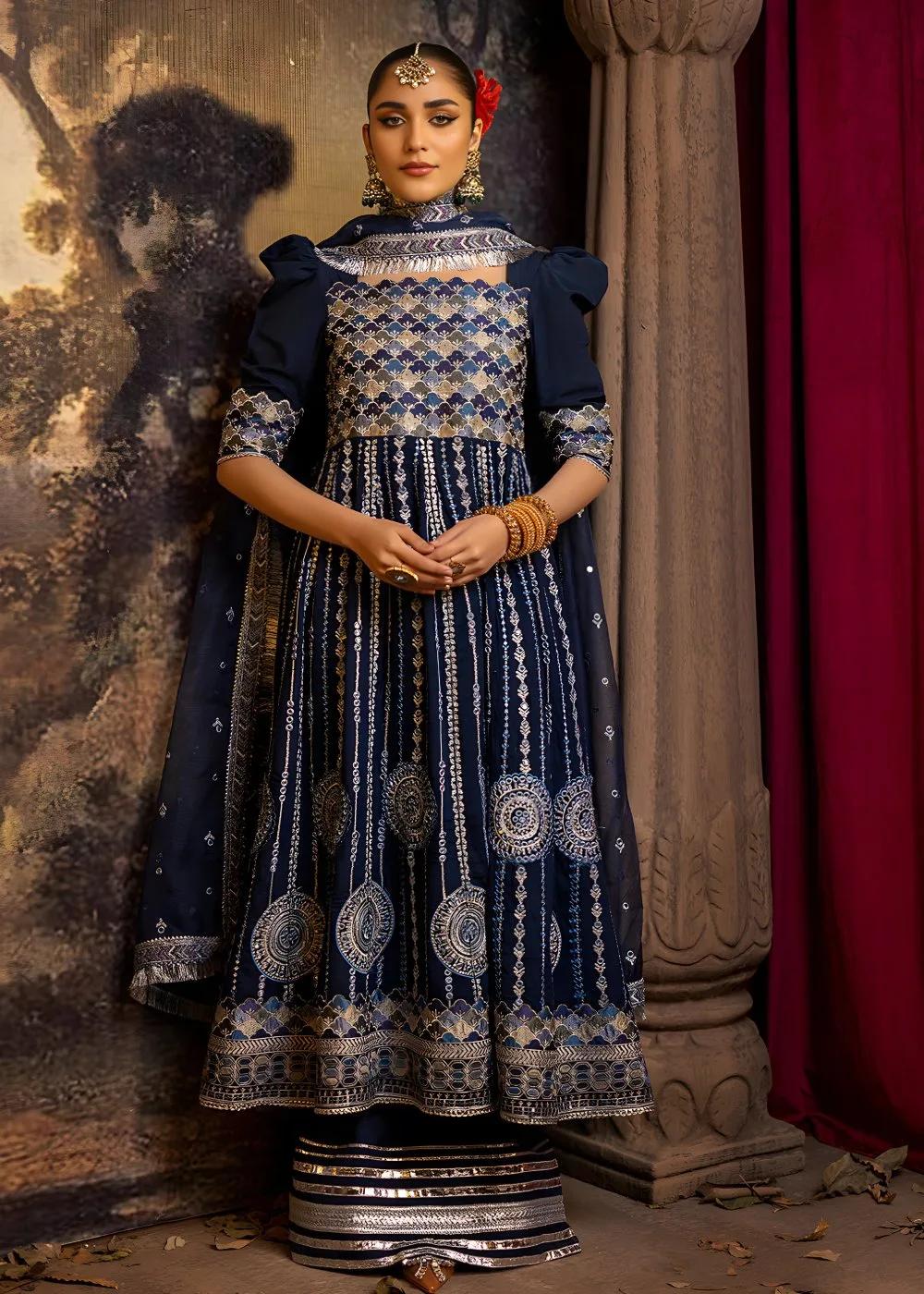
Faiza Faisal
Nazli Begum – Navy Blue Embroidered Thai Silk Luxury Formal Suit
Thai Silk
Rs. 11,438Rs. 15,250
Colours and embellishment that work under evening lighting
Evening lighting is warm and often dim, so colour behaves differently than in daylight.
- Jewel tones such as emerald, navy, plum and deep teal read rich and photograph well.
- Pastels and off-white can look washed out under yellow light unless there is gold or silver work to give them definition.
- Black is elegant but needs embroidery or a contrasting dupatta to avoid looking flat.
For embellishment, zari, sequins and dabka catch light; thread work in a matching shade is subtler. At a crowded event, one focal point is enough: heavy work on the shirt with a quieter dupatta, or the reverse. For background on the work itself, see our guide to types of embroidery in Pakistan.
Layering for warmth: shawls, jackets and inner layers that keep the outfit formal
Layering is where most winter outfits succeed or fail. A few practical rules:
- Start thin. A fitted thermal or soft cotton inner under a chiffon or net shirt adds warmth without bulk. Skip anything with visible seams or necklines.
- Choose a shawl that matches the work. A plain pashmina-style or embroidered shawl in a colour taken from the outfit looks deliberate. Wear it draped over both shoulders or pinned loosely at one side.
- Use a jacket for fitted shirts. A short embroidered or velvet jacket over a straight shirt keeps the silhouette tidy.
- Remove, do not pile on. Aim for layers you can take off once you are indoors, so the outfit still looks complete without them.
Do not hide a heavily embroidered shirt under a bulky coat. If you must travel in one, carry the dupatta and put it on at the door.
Unstitched, ready-to-wear or custom stitched for an event date
Timing matters. Unstitched fabric lets you choose the cut, sleeve length and lining, which is useful for winter, since you can add a lining or a fuller sleeve. Ready-to-wear is quickest. Custom stitching to your measurements gives the best fit but needs lead time, so order well before the event and allow for shipping if you are abroad. Our comparison of unstitched, ready-to-wear and custom stitching explains the trade-offs. Check the shipping policy for delivery details before you commit to a date.
Jewellery, clutch and footwear pairings
Match the intensity of the jewellery to the embroidery. Heavy work calls for earrings or a necklace, not both. Plain or lightly worked outfits can carry a statement set. Gold tones suit warm colours and olive, while silver and pearl sit well with navy, grey and jewel blues.
A small beaded clutch finishes the look and keeps your hands free. The handmade black crystal evening clutch works with most dark and jewel shades, while the teal and ivory crochet bag with gold chain suits lighter, softer outfits. For shoes, closed-toe heels or embellished flats are sensible in cold weather, and a thin pair of socks or tights under a long trouser is invisible and warm.
Care after the event: storing velvet and embellished chiffon
- Velvet: dry clean or follow the label. Hang it, or fold with tissue; avoid pressing the pile flat. Steam from a distance to lift creases.
- Embellished chiffon and net: let it air out, then fold with acid-free tissue between embroidered areas to stop snagging. Store in a breathable cotton cover, not plastic.
- All formal suits: keep away from damp and direct sun, and do not spray perfume directly on the fabric.
Choosing your Pakistani evening wear
Decide the venue first, then the fabric, then the colour. Velvet and raw silk for cold rooms, chiffon and organza for warm ones, and a well-chosen shawl in either case. If you want to compare options, browse our formal dresses and party wear, or message us with your event date and we can help you choose between stitched and unstitched.