
Choosing a Pakistani wedding lehenga, sharara or gown comes down to three choices: the silhouette, the colour and the embroidery. The last one matters most. It decides how heavy the outfit feels, how long it takes to make and how much it costs. This guide covers each choice, plus regional styles and the practical details brides tend to learn too late.
Red, gold and beyond: current Pakistani bridal colour trends
Red is still the classic for a barat, and nobody is retiring it. But more brides now choose softer or deeper shades, especially for the nikkah and walima. Common choices include:
- Blush, peach and champagne for nikkah and daytime ceremonies, often with silver or pearl work instead of gold.
- Emerald and bottle green, which suit zari and photograph richly under evening lights.
- Ivory and off-white for a gown-style nikkah look.
- Powder blue, lilac and sage for mehndi or smaller functions.
- Maroon, wine and plum when you want red's drama with a more modern feel.
These are style observations, not measured trends. Our keyword data shows searches for wedding outfits are steady (Google Keyword Planner), so there is no sudden shift, only gradual taste changes. Choose a colour that suits your skin tone and your venue's lighting, not the one that is merely popular.
Regional styles: Punjabi, Sindhi, Balochi and Pashtun influences
Punjabi: Usually a heavy shirt with a sharara, gharara or lehenga, plenty of zari and dabka, and a rich, often red or maroon, palette. The dupatta is typically substantial.
Sindhi: Known for mirror work (shisha), bold colour contrasts and traditional motifs. Ajrak and applique often appear in mehndi and cultural functions.
Balochi: Dense, hand-worked embroidery in geometric and floral patterns, often on a long shirt with wide shalwar. We cover this in detail in our Balochi dress guide, and you can browse the Balochi dress collection.
Pashtun influence: Think coin and bead detailing, tassels and bold jewellery, sometimes blended into modern bridal pieces.
Many brides now mix elements, for example a Punjabi-cut lehenga with Sindhi mirror accents. That is a personal choice rather than a rule.
Thread embroidery vs. zari work vs. mirror and bead detail
This is where cost and comfort are decided. Our guide to Pakistani embroidery types goes deeper, but the basics are:
| Work | Look | Weight | Cost tendency |
|---|---|---|---|
| Thread | Soft, matte, colourful | Lightest | Lower to mid, depends on density |
| Zari / dabka / tilla | Metallic, formal | Medium to heavy | Mid to high |
| Mirror and bead | Sparkling, textured | Heaviest per area | Varies with hand work and density |
These are general tendencies, not quotes. Prices depend on how dense the work is, whether it is done by hand or machine, and the fabric underneath. Ask for the work type and coverage area before you commit.
If you will dance and stand for hours, choose heavy work on the shirt front and dupatta border, and keep the lower half lighter.
Pakistani wedding lehenga, sharara or gown: which silhouette suits you
- Lehenga: Flattering on most figures; a high waistband defines the waist. Very full skirts add visual volume, so pick a medium flare if you are petite.
- Sharara and gharara: Elongate the leg and suit taller brides or those who like traditional lines. They need confident walking.
- Gown or maxi: A clean, long line that works well for nikkah and walima, and for brides who want a western-influenced look.
Whatever you pick, fit decides how it looks. Custom stitching to your own measurements avoids the alterations that heavy embroidery makes difficult.
Dupatta styling: length, weight and drape for photos
A dupatta changes the whole look. Net and organza drape lightly, while heavily bordered ones hold structure. A common approach is a lighter dupatta over the head with a second, heavier one pinned at the shoulder. Test pinning with a mirror and a friend, and sit down in it. Photographers like a dupatta that falls cleanly behind you, so ask for the border width to be checked against your height.
Layering and jewellery to complement your dress
Balance is the rule. Heavy embroidery pairs with simpler jewellery, such as a statement necklace but light earrings, while a plainer dress can carry a full set with tikka and jhumar. Gold-toned work suits kundan, and silver or pearl work suits polki-style or pearl pieces. Keep your neckline in mind: a high embroidered neckline rarely needs a necklace at all.
Budget breakdown: where embroidery and fabric cost most
Spending usually splits across three areas: the base fabric (net, organza, velvet, raw silk), the embroidery and the stitching. Embroidery is typically the biggest part for bridal pieces, and it rises with density and hand work. Fabric weight and lining add more. Set aside money for fitting and for the dupatta, which is often priced separately in formal sets.
For a nikkah, lighter fabrics and thread work give a refined look at a gentler cost. Save the heaviest work for the barat. Our occasion-by-occasion bridal guide helps you split the spend, and overseas shoppers should plan shipping time too.
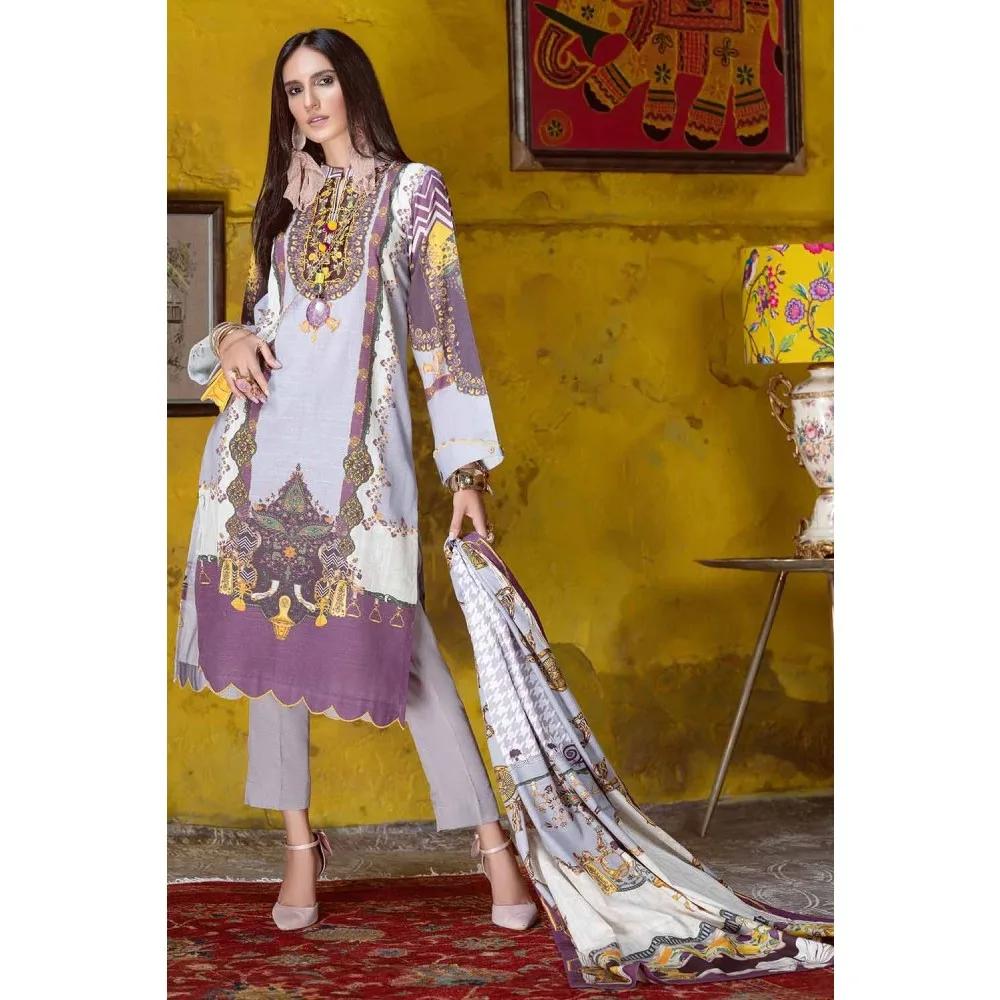
For guests, bridesmaids or pre-wedding functions, embroidered formal suits are a practical pick:
Planning your wedding outfit
Pakistani wedding dresses reward early planning: pick your colour and embroidery type first, then silhouette, then accessories. Wedding season runs November to February, so order and stitch well ahead. You can explore our bridal collection or message us for custom stitching to your measurements.