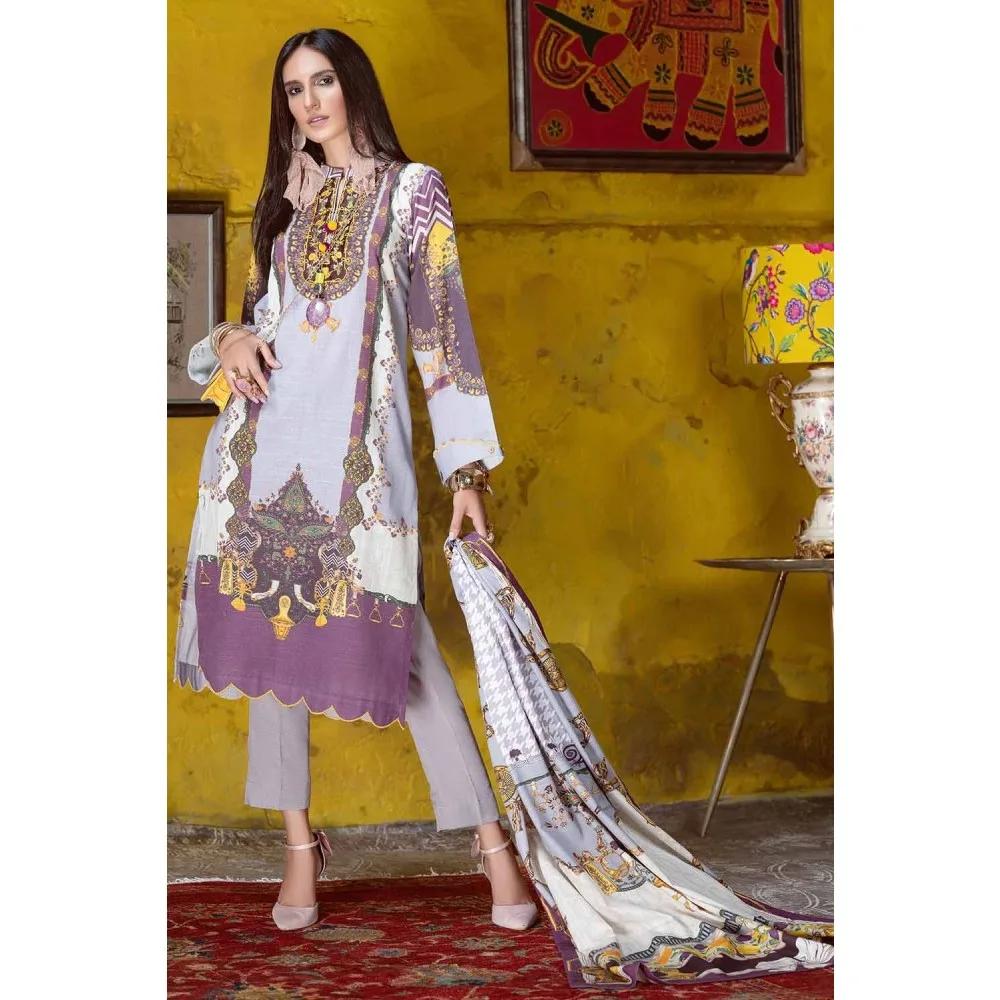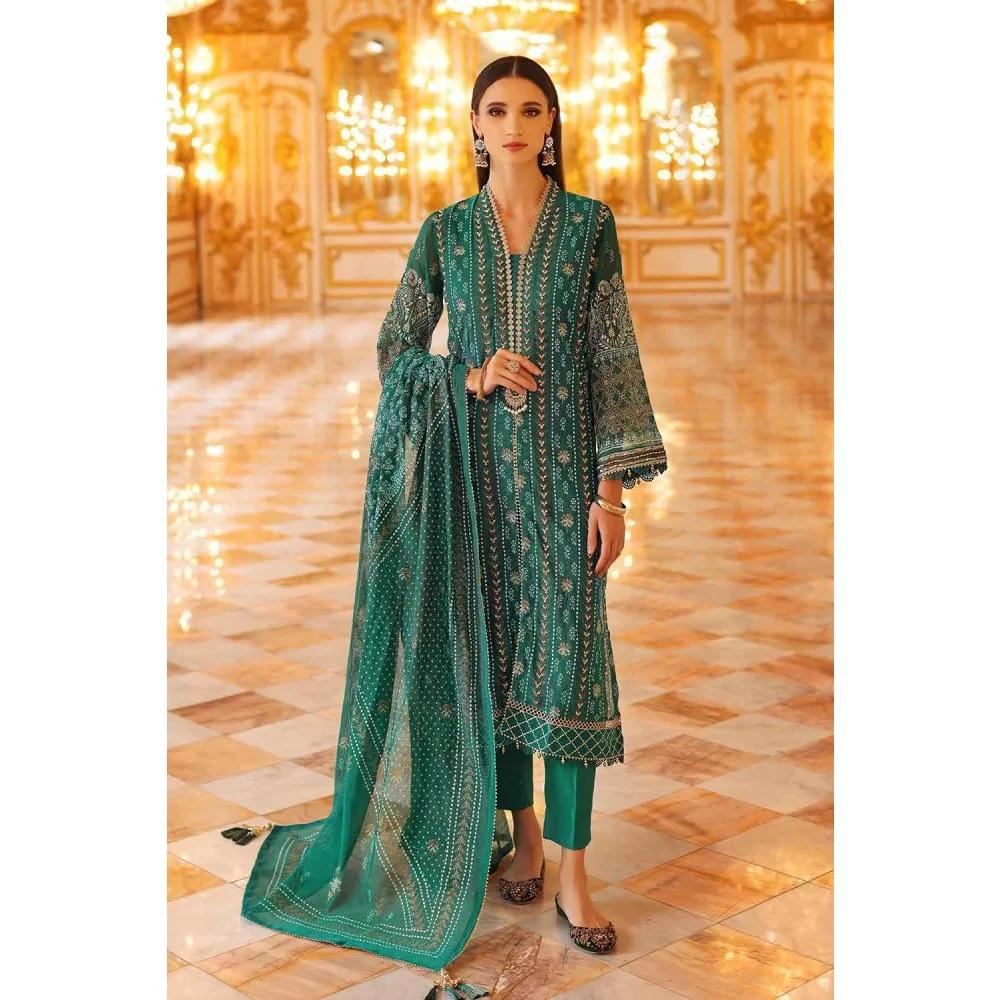
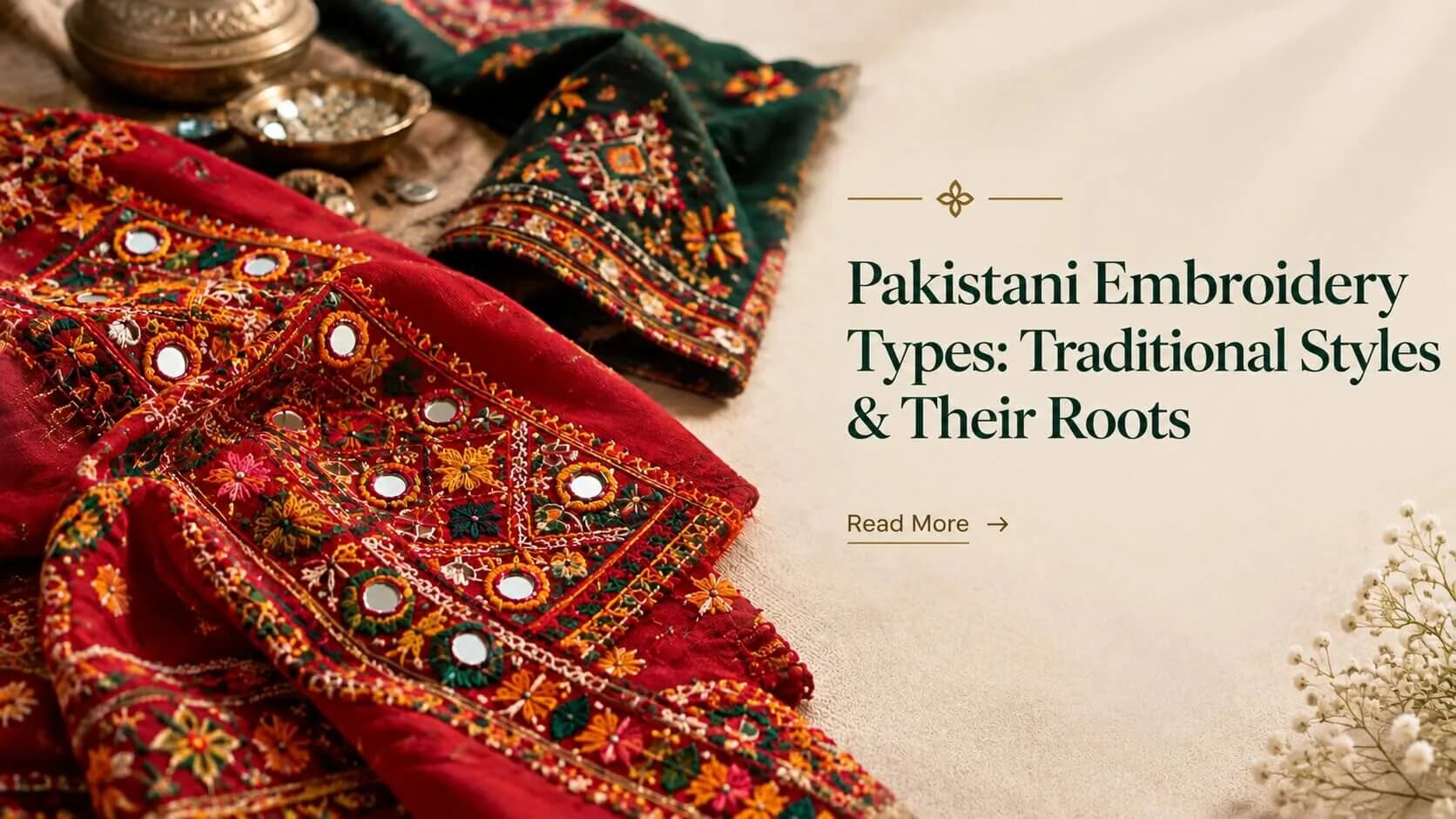
Every Pakistani grandmother has a trunk with at least one piece she refuses to give away. It might be a Sindhi shawl covered in tiny mirrors, a Balochi dress stitched by hand over months, or a wedding dupatta heavy with gold thread. Embroidery carries family stories in Pakistan. At Askani Group, we stock embroidered suits from Gul Ahmed, Asim Jofa, Gulljee, and our own label, and we see how much customers care about the craft behind each piece. Our Festive Collection brings many of these traditional techniques into modern outfits. In this blog, we walk through the main Pakistani embroidery types, where each one comes from and how to wear them today. Find your favourite below. Below are the main types of embroidery you will find in Pakistan, region by region.
The main Pakistani embroidery types are Sindhi mirror work, Balochi embroidery, Phulkari, Swati work, zardozi, gota, tilla, aari, and chikankari.
Each province has its own style, shaped by local culture, climate, and centuries of hand stitching passed between generations.
Pakistani Embroidery Types at a Glance
Style | Region | Key Feature | Best For |
|---|---|---|---|
Sindhi mirror work | Sindh | Small mirrors framed with bright thread | Mehndi, festive wear |
Balochi embroidery | Balochistan | Dense geometric hand stitching | Cultural events, statement outfits |
Phulkari | Punjab | Silk floss flowers on coarse cotton | Dupattas, mehndi |
Swati work | Swat, Khyber Pakhtunkhwa | Bold geometric patterns in bright silk | Shawls, kurtas |
Zardozi and dabka | Mughal courts, now nationwide | Metallic wire and coiled thread | Bridal and baraat |
Gota work | Punjab and Sindh | Gold or silver ribbon appliqué | Mehndi, Eid, festive |
Tilla work | Multan and Punjab | Fine metallic thread outlines | Formal wear |
Chikankari | Subcontinent, popular in Pakistan | Delicate white shadow work | Summer and daytime wear |
Traditional Pakistani Embroidery by Region
Sindhi Mirror Work
Sindh is famous for its shisha, or mirror work. Small round mirrors are held in place with tight buttonhole stitches in red, orange, yellow, and green thread. The mirrors catch light beautifully, which is why Sindhi pieces feel so alive at night functions. The work is usually done on cotton or khaddar, and it shines brightest at mehndi, cultural days and festive gatherings.
Balochi Embroidery
Balochi embroidery is one of the most detailed handicrafts in the region. Women stitch dense, symmetrical geometric patterns across the front panel, sleeves, and a large front pocket of the traditional dress, usually on cotton or silk blends. A single outfit can take weeks or even months to finish, which is why these pieces are saved for weddings, Eid, and cultural events. We have covered this craft in depth in our Traditional Balochi Dress guide.
Phulkari
Phulkari means "flower work". It comes from Punjab and uses long darning stitches in silk floss over coarse cotton or khaddar, creating bold floral and geometric blocks in pink, orange, yellow and green. Traditionally, mothers stitched phulkari dupattas for their daughters' weddings, and today phulkari dupattas remain a favourite for mehndi and festive layering.
Swati Embroidery
From the valleys of Swat, this style uses bright silk thread in bold geometric motifs, often on dark fabric for striking contrast and clean lines. It appears on shawls, caps, and kurtas, and holds up well to daily wear, which makes it popular for winter shawls and casual statement pieces.
Formal and Bridal Embroidery Styles
Some Pakistani embroidery designs are reserved for the biggest occasions. These techniques use metal threads, ribbons, and beads to create shine and weight.
Zardozi is the grandest of them, using metallic wire and thread worked by hand, a craft that flourished in Mughal courts. Dabka and nakshi use coiled metal thread to add raised texture to bridal outfits. Gota brings gold or silver ribbon into borders and motifs, and it has long been a mehndi favourite.
For something lighter, tilla work outlines floral patterns in fine metallic thread, giving an elegant look without heavy weight. Aari is a chain stitch made with a hooked needle, fast and neat, and it is often paired with sequins on party wear.
For a modern take on formal embroidery, the Gul Ahmed Embroidered Jacquard Shirt with Embroidered Chiffon Dupatta FE-42018 combines rich thread work with a lighter feel for dinners and walima.
Everyday Embroidery for Modern Wardrobes
Not all embroidery is heavy. Chikankari and light resham, or silk thread work, bring traditional detail into daily outfits. Brands now place these touches on necklines, sleeves and daman borders of lawn and cambric suits, so you can wear heritage craft to the office or a family lunch.
The Gulljee Luxurious Digital Printed Embroidered Lawn Suit is a good example, with embroidery that adds detail while keeping the suit light for warm days.
Which Embroidery Suits Which Occasion?
Occasion | Best Embroidery | Why It Works |
|---|---|---|
Everyday and office | Chikankari, light resham | Subtle, breathable, easy to wear |
Eid | Resham, tilla, light gota | Festive without heavy weight |
Mehndi | Mirror work, gota, phulkari | Bright colours and sparkle |
Baraat | Zardozi, dabka, nakshi | Grand, formal and rich |
Walima | Tilla, pearl and sequin work | Elegant and refined |
Winter gatherings | Swati, Kashmiri style shawls | Warm fabrics with bold detail |
How Can You Tell Hand Embroidery From Machine Embroidery?
Turn the fabric over. Hand embroidery usually shows small irregularities, slightly uneven stitches and knots on the back. Machine embroidery looks perfectly uniform on both sides, often with a backing sheet or dense bobbin thread behind the design.
Hand work also feels softer and more flexible, while machine work can feel stiffer. Both have a place. Machine embroidery makes detailed designs affordable and consistent, while hand embroidery carries the character of the artisan who made it.
What to Check Before You Buy
Look at the back of the embroidery for loose threads or uneven tension, since this tells you a lot about quality. Compare the weight of heavy work against the base fabric, because thin bases can sag under dense embroidery. If the design uses metallic threads, ask how to store the outfit so they do not tarnish. Finally, confirm which pieces carry the embroidery, whether it is the shirt, the dupatta or the trouser.
Common Buying Mistakes
A frequent mistake is choosing heavy zardozi for a summer daytime event. Washing mirror or gota work in a machine is another, as it quickly damages the detailing. Many buyers ignore the dupatta, even though it often carries most of the embroidery. Storing embroidered pieces in plastic traps moisture and dulls metal threads, and paying handwork value for machine pieces is easy to avoid once you know how to check the back.
Key Takeaways
Each province has its own embroidery identity, from Sindhi mirrors to Balochi stitching and Punjabi phulkari. Zardozi, dabka, and gota lead in bridal and formal wear, while chikankari and resham suit everyday and summer outfits. Match the embroidery weight to the event and season, and always check the back of the work to judge its quality and technique.
Planning a big day? Browse our Bridal Collection for embroidery that carries tradition into every function.