
A simple white nikkah dress is the classic choice: modest, light enough to sit in for an hour or more, and soft in colour. Ivory, off white, mint, blush and muted gold work just as well. Pick a fabric that drapes well, plan your dupatta so it stays put during the ceremony, and choose something you could wear again. This guide covers each of those decisions.
What Makes a Nikkah Outfit Different from Other Wedding Events
The nikkah is the religious and legal ceremony, and it is usually quieter than the barat or walima. You may be seated for a long time, signing papers, having photographs taken and receiving duas from elders. That changes what the outfit has to do.
It also happens in different settings: at home, in a mosque, in a banquet hall, or as one combined ceremony with the rest of the wedding. A home or mosque nikkah calls for full sleeves, a dupatta that covers the head easily, and a hem you will not trip on. A hall nikkah allows more embroidery and a longer shirt, but comfort still matters more than weight.
If you are shopping for the whole wedding, our guide to choosing bridal wear by occasion shows where the nikkah sits next to the mehndi and barat.
Simple White Nikkah Dress and Other Classic Colours: Ivory, Mint, Blush and Gold
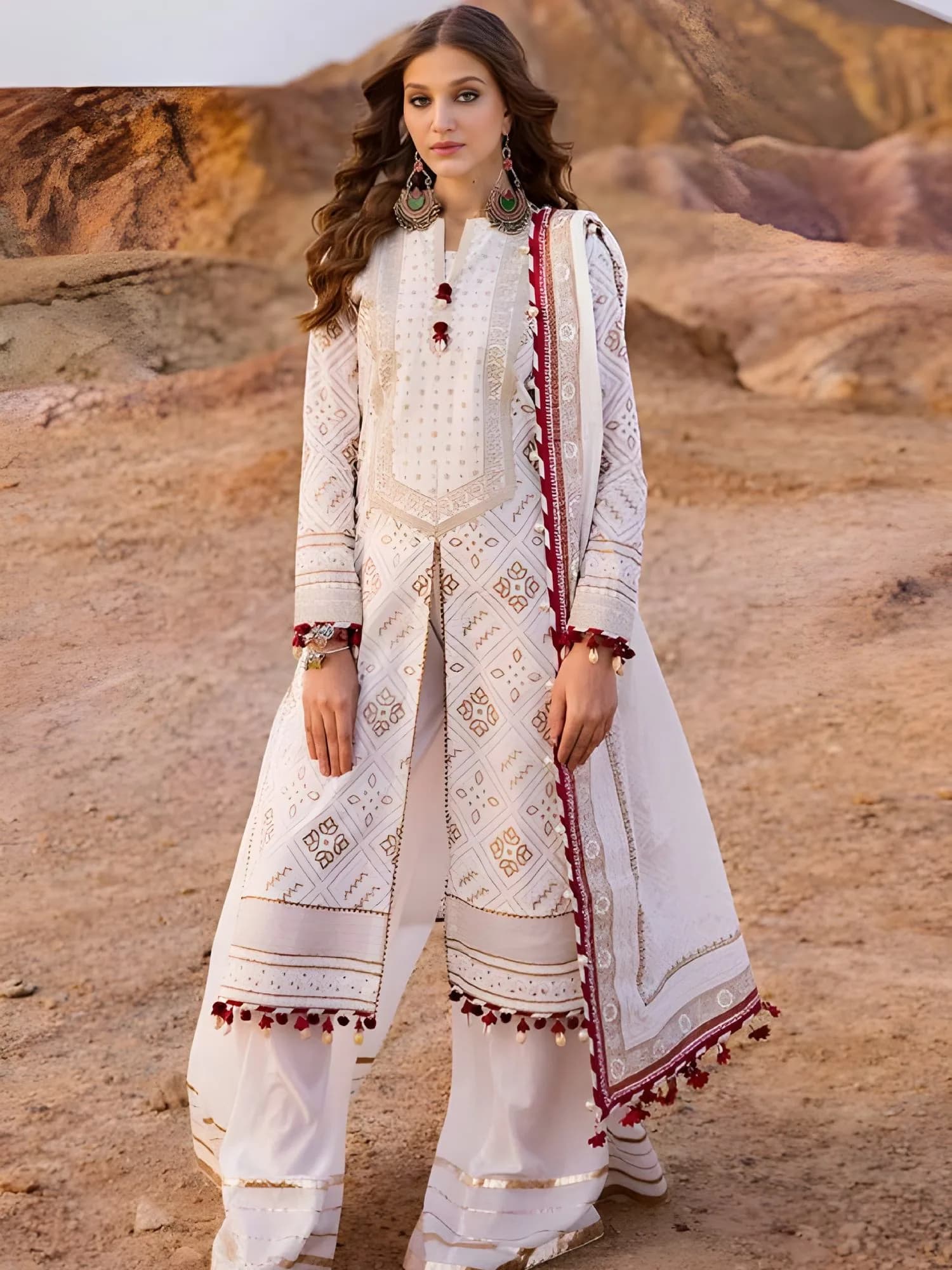
- White and ivory: the traditional choice. Ivory is kinder on most skin tones than stark white and photographs warmly.
- Off white with a coloured dupatta: a good middle path if you want some contrast without a heavy red.
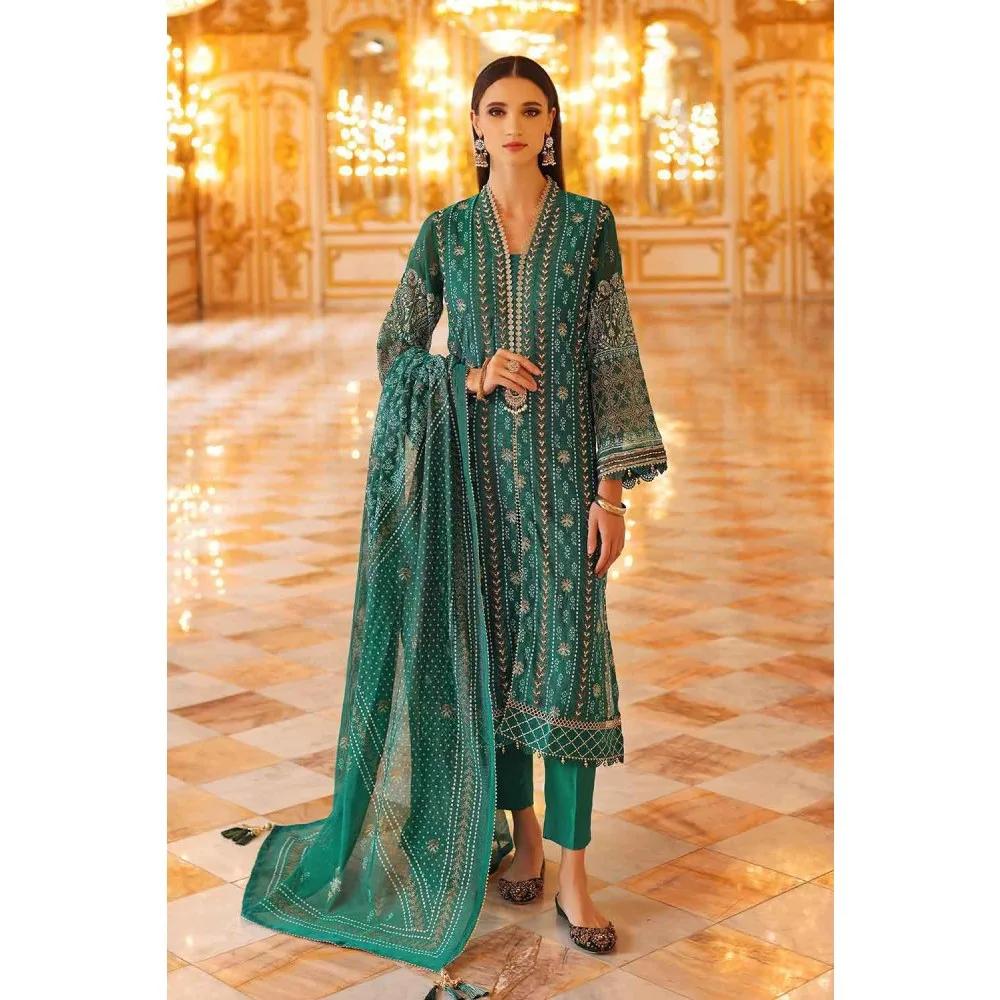
- Mint: fresh and increasingly popular for daytime nikkahs. It suits both fair and deeper skin tones.
- Blush and tea pink: soft, romantic, easy to pair with gold jewellery.
- Gold and beige-gold: richer, better for evening ceremonies.
Keep the palette gentle and let the embroidery carry the detail. Save deep red for the barat if that is your plan.

Askani Group of Companies
Off White Balochi Party Wear Suit with Maroon Dupatta
Chiffon
Rs. 17,385Rs. 18,299
Choosing Fabric: Chiffon, Organza, Jacquard and Raw Silk Compared
| Fabric | Feel and drape | Best for |
|---|---|---|
| Chiffon | Light, flowing, slightly sheer, so usually lined | Long sittings, warmer venues, soft dupatta drape |
| Organza | Crisp, holds shape, catches light | Structured dupattas and necklines |
| Jacquard | Woven pattern, firm, a little heavier | Cooler months, a polished look without much embroidery |
| Raw silk | Textured, rich, holds a silhouette | Lehenga-style or formal evening outfits |
With wedding season running from November to February, a jacquard or raw silk suit is comfortable. Chiffon works well too, especially with a shawl or wrap for the walk in. For more on how materials behave, see our fabric guide.
Dupatta Styles for the Ceremony: Coverage, Pinning and Comfort
The dupatta does more work at a nikkah than at any other event. Plan it before the day.
- Head covering: a lightweight chiffon or net dupatta stays on better than stiff organza. If you choose organza, pin it.
- Pinning: use small hidden pins or hair clips at the crown and behind each ear. Practise with the actual dupatta, not a substitute.
- Border weight: a heavy border helps the dupatta fall evenly, but too much weight pulls it back. Test it by turning your head.
- Shoulder drape: pin one side to the shoulder of the shirt so it does not slide when you sign or accept congratulations.
- Second dupatta: some brides wear a plain chiffon veil under a heavily worked one for easier coverage and a lighter feel.
Sit down in the outfit before the day and check that the dupatta stays in place, your sleeves cover your wrists and you can lift your hands comfortably.
Unstitched, Ready-to-Wear or Custom Stitched for Your Nikkah
Unstitched fabric gives you the most control over fit and neckline, and it takes time. Ready-to-wear is quicker but limited to the sizes made. Custom stitching to your measurements sits in between: you pick the fabric and we stitch to your numbers. Allow generous time for stitching and one fitting round, especially if you are ordering from abroad. Our comparison of unstitched, ready-to-wear and custom stitching goes through the trade-offs.
If you live overseas, read our notes on what to buy for weddings and Eid and check the shipping policy for timelines.
Rewearing Your Nikkah Dress at Eid and Family Functions
A nikkah outfit does not have to be a one-day purchase. A few choices make it reusable:
- Pick a soft shade (ivory, mint, blush) rather than a heavily bridal colour.
- Choose embroidery that is refined, not covering every inch.
- Ask for a shirt length and trouser that work on their own, so you can pair the shirt with a different dupatta later.
- Keep the dupatta simple enough to style loosely for Eid.
A mint or off white suit can come out again for Eid ul Fitr or a cousin's dholki with a change of jewellery and a lighter dupatta. Browse the Eid collection for ideas on how festive pieces are styled.

Faiza Faisal
Beige Gold Embroidered Korean Raw Silk Lehenga Suit – Luxury Formals
Korean Raw Silk
Rs. 14,175Rs. 18,900
Nikkah Outfit Ideas for Mothers, Sisters and Guests
Guests should stay softer than the bride. Mothers often choose jacquard, raw silk or chiffon in muted tones such as dusty rose, sage or champagne with a neat dupatta. Sisters can go a little brighter with mint, peach or lemon, but avoid competing with the bride's colour. Female guests at a mosque nikkah should plan for covered arms and a dupatta they can use over the head. For men, see our guide to Pakistani men's shalwar kameez.
Final Thoughts
Good nikkah dresses balance modesty, comfort and a colour you love. Settle the setting first, then the fabric, then the dupatta, and leave time for fitting. You can browse Pakistani bridal dresses and the Balochi dress range at Askani Group, or message us about custom stitching to your measurements.