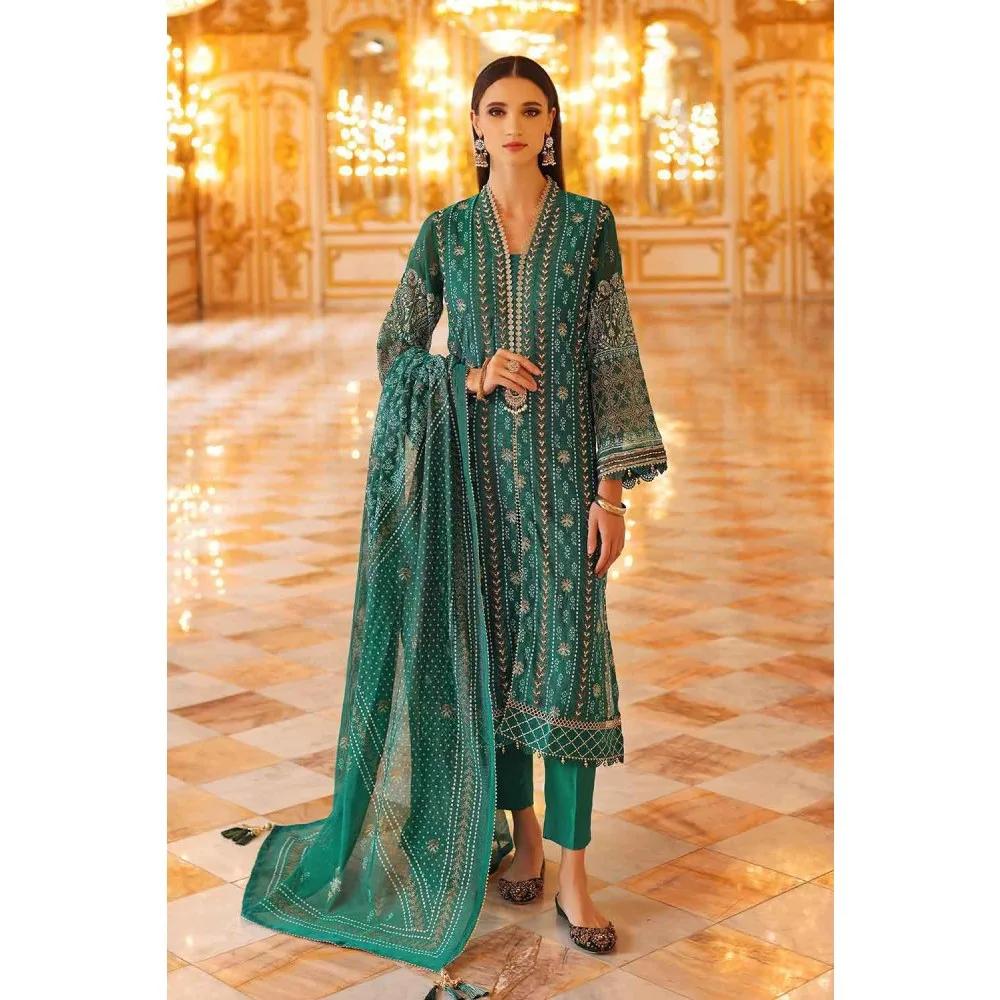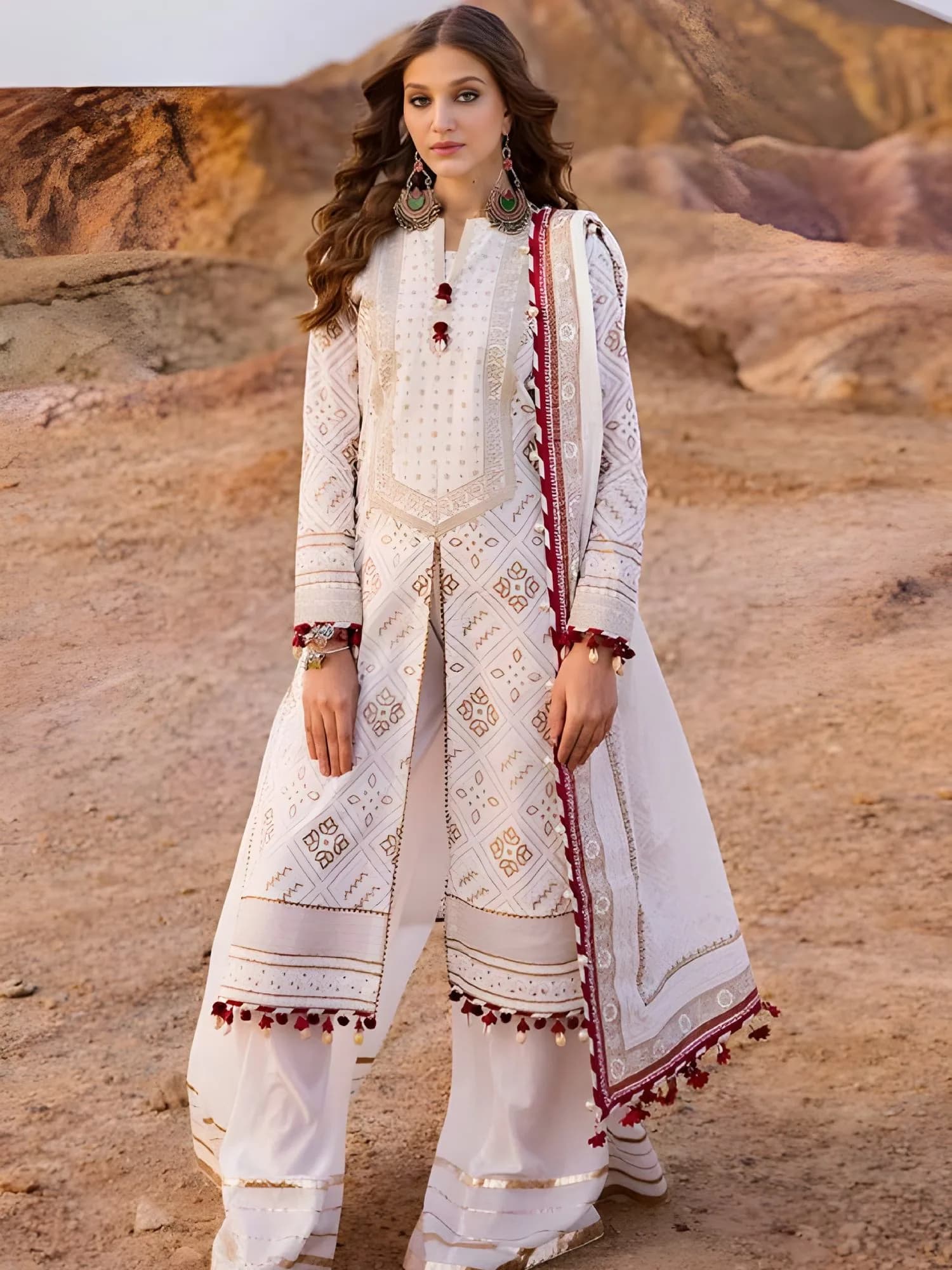
When you're shopping from a Pakistani clothing brand, you'll find three main ways to buy: unstitched fabric, ready-to-wear, or custom stitching to your measurements. Each has different trade-offs in cost, time, and fit. If you're a first-time buyer or ordering from abroad, understanding these differences can save you money, disappointment, and a wardrobe full of clothes that don't quite work.
Here's an honest comparison of all three options, with real timelines and practical advice on when to choose each.
What Unstitched Really Means
Unstitched suits are the most popular format in Pakistan. You buy fabric — typically two or three metres of shirt fabric, two to three metres for the shalwar or trousers, and a dupatta — already printed, embroidered, or embellished by the brand. You then take it to your own tailor or send it back to the retailer for stitching.
This is how most shalwar kameez and Pakistani suits are sold domestically. Brands like Gul Ahmed, Saya, and Sapphire release seasonal collections as unstitched three-piece sets. The fabric is cut to standard yardage, not to your body, so you control the final design: neckline, sleeve length, trouser cut, even whether you want a kurta or a shorter kameez.
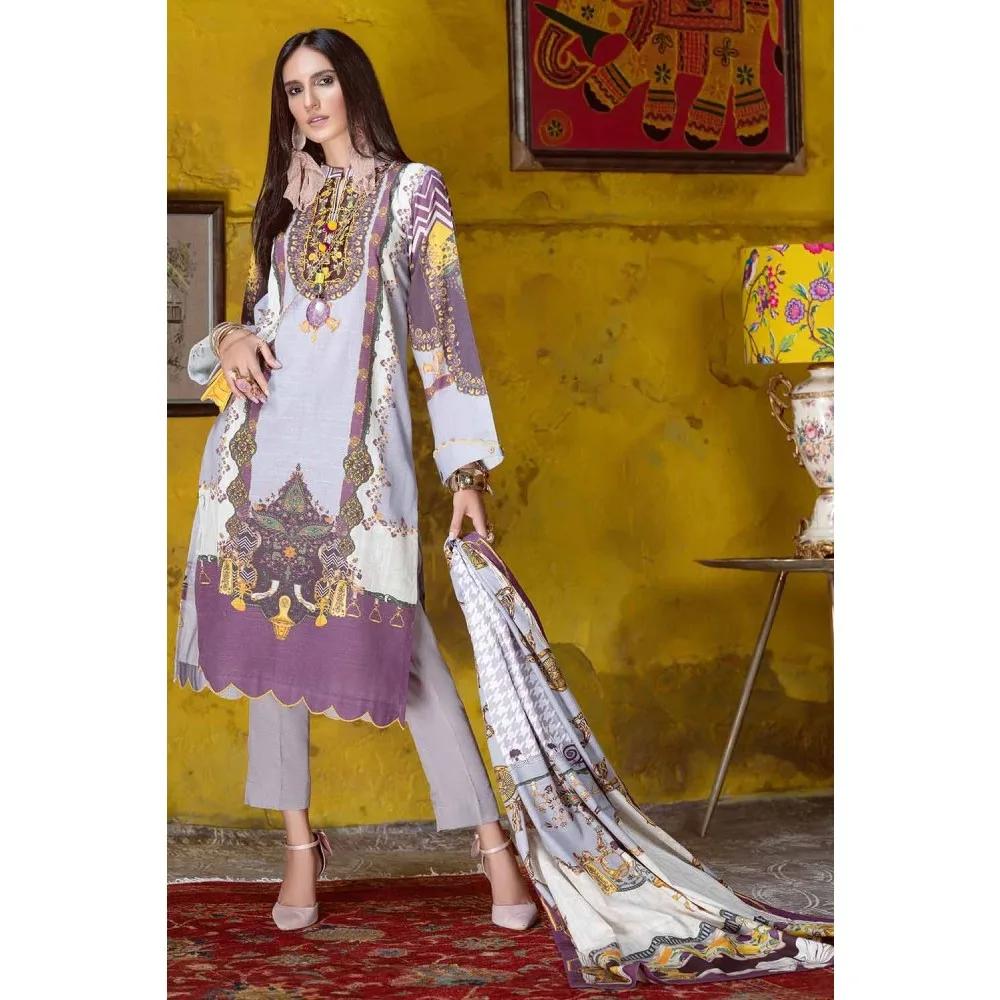
Cost: Usually the cheapest option. You're buying fabric only. A printed lawn suit might start around PKR 2,000–4,000; embroidered khaddar or karandi can range from PKR 4,000–12,000 depending on the brand and work. You then pay your tailor separately — in Pakistan, stitching a simple three-piece suit typically costs PKR 1,500–3,000; more intricate cuts or piping add to that.
Timeline: If you're in Pakistan with a trusted tailor, one to two weeks from fabric purchase to finished outfit. If you're abroad and shipping fabric to a tailor back home or to a diaspora tailoring service, add international shipping time (one to three weeks each way) plus the tailor's queue.
Fit control: Total. Your tailor cuts to your exact measurements and preferences. This is why unstitched is the default for women who know their style and have a reliable tailor.
Risk: Quality depends entirely on your tailor. A poor tailor can ruin expensive fabric. If you're new to this or ordering from overseas without a tailor contact, unstitched can feel overwhelming.
Ready-to-Wear: Speed, Sizing, and Fit Compromises
Ready-to-wear (RTW) means the outfit is already stitched to standard sizes — usually small, medium, large, XL, sometimes numerical sizes. You order, it ships, you wear it. No tailor needed.
RTW works well for casual shalwar kurta, everyday kurtis, and simple designs where fit tolerance is high. It's faster and requires no tailoring knowledge. But Pakistani formal wear — especially bridal or party wear with heavy embroidery and precise draping — is rarely sold ready-to-wear because fit expectations are too high.
Cost: Usually more expensive than unstitched (you're paying for the labour), but you save on separate tailoring fees. A ready-to-wear lawn suit might cost PKR 4,000–8,000; formal RTW can go much higher.
Timeline: Fastest option. If it's in stock, you can wear it within days. Shipping within Pakistan takes two to five days; international shipping one to two weeks.
Fit control: Limited. Standard sizes rarely account for differences in shoulder width, arm length, bust, or hip proportions. Alterations are often needed, which adds time and cost back in. Ladies' Pakistani clothes in RTW tend to run small or inconsistent across brands, so always check the size chart and reviews.
Risk: Moderate. You might receive something that doesn't fit well, especially if you're between sizes. Returns from abroad can be expensive and slow.
Custom Stitching: Timeline, Cost, and Fit Perfection
Custom stitching means you buy the fabric (unstitched) from the brand and pay them — or a third-party service — to stitch it to your exact measurements. Many Pakistani clothing brands now offer this as an add-on, especially for diaspora customers who don't have a tailor.
Askani Group, for example, offers stitching services: you provide detailed measurements (bust, waist, hips, shoulder, sleeve length, shirt length, trouser or shalwar length, and sometimes more for formal designs), choose your style preferences (neckline, sleeve type, trouser cut), and the brand stitches and ships the finished outfit.
Cost: Mid-range. You pay for the unstitched suit plus a stitching fee. Stitching fees vary: simple three-piece suits might add PKR 2,000–4,000; heavily embroidered or complex cuts (peplum, jacket-style, palazzo trousers) can add PKR 5,000–8,000 or more. Total cost is usually less than RTW but more than unstitched-only if you have access to a cheaper local tailor.
Timeline: Two to four weeks from order to delivery, depending on the tailor's workload and shipping. During peak season (wedding months November to February, or before Eid), expect delays. Always order at least six weeks before you need the outfit.
Fit control: High, if you measure correctly. The tailor follows your measurements and style notes. You get the fabric quality and design you chose, fitted to your body.
Risk: Measurement errors. If you measure yourself incorrectly, the outfit won't fit, and remote tailors can't do quick adjustments. This is the single biggest problem with custom stitching from abroad.
Measuring Yourself Accurately for Tailoring
Whether you're using a brand's stitching service or sending fabric to a tailor, accurate measurements are everything. Here's how to do it properly:
- Use a soft measuring tape (tailor's tape), not a metal ruler or string.
- Wear the undergarments you'll wear with the outfit (the right bra makes a difference to bust and shoulder measurements).
- Ask someone to help. Self-measuring leads to errors, especially for back width and shoulder-to-shoulder.
- Stand naturally — don't suck in your stomach or pull the tape tight. The tape should lie flat against your body without digging in.
Key measurements for a women's shalwar kameez:
- Bust (fullest part of the chest)
- Waist (natural waistline, usually narrowest part of torso)
- Hips (fullest part, about 20 cm below waist)
- Shoulder width (from shoulder bone to shoulder bone across the back)
- Sleeve length (shoulder to wrist, with arm slightly bent)
- Shirt length (shoulder to desired hem — knee, mid-calf, or ankle)
- Trouser/shalwar length (waist to ankle, or to desired hem if you want cropped)
- Arm circumference (around the fullest part of your upper arm, if you want fitted sleeves)
Many tailors also ask for front shirt length (shoulder over bust to hem) and back shirt length separately, especially for longer shirts. If you're ordering a shalwar kurta for men, you'll also need chest, collar, and sometimes thigh measurements.
Common mistakes: Measuring over bulky clothes, confusing inches with centimetres, rounding numbers, or taking measurements while sitting. Always double-check and compare against a well-fitting outfit you already own.
Shipping Unstitched Fabric vs. Finished Suits Internationally
If you're ordering from abroad, shipping costs and customs rules differ depending on what you buy.
Unstitched fabric is lighter and often cheaper to ship. A three-piece unstitched lawn or khaddar suit weighs around 500–800 grams; embroidered or velvet suits with heavy dupattas can reach 1–1.5 kg. Customs duties vary by country, but unstitched fabric is usually classified as textile/fabric, which may have lower duty rates than finished garments in some markets (check your country's import rules).
Finished suits (RTW or custom-stitched) weigh about the same but may be classified as "apparel" for customs, sometimes triggering higher duties or VAT. Shipping is the same speed, but if the outfit doesn't fit, you face return shipping costs and potential restocking fees.
Askani Group ships internationally to the UK, USA, Canada, UAE, Saudi Arabia, Australia, and Bangladesh. Delivery typically takes one to two weeks via standard courier (DHL, FedEx, or local post). Always confirm duties and taxes at checkout — some countries require the recipient to pay import fees on delivery.
When to Choose Each Option: Budget, Occasion, and Timeline
Choose unstitched if:
- You have a trusted tailor (in Pakistan or in your diaspora city).
- You want full control over the cut, style, and fit.
- You're on a budget and willing to invest time.
- You're buying formal or bridal wear where fit is critical and you know your tailor can handle intricate work.
- You're ordering well in advance (at least four to six weeks before you need it).

Choose ready-to-wear if:
- You need the outfit quickly (within one to two weeks).
- It's for casual or everyday wear where fit tolerance is higher (kurtis, simple shalwar kameez, co-ord sets).
- You don't have access to a tailor and don't want the hassle of custom stitching.
- You're willing to pay a bit more for convenience.
- You've checked the brand's size chart carefully and read reviews about fit.
Choose custom stitching if:
- You're ordering from abroad and don't have a reliable tailor in your city.
- You want the fabric and design quality of unstitched with the convenience of a finished outfit.
- You have time (at least three to four weeks, ideally six to eight during peak season).
- You're confident in taking accurate measurements or can visit a local tailor to have them taken professionally.
- The outfit is for a special occasion (wedding guest, Eid, formal event) where fit and finish matter.
Common Sizing Mistakes and How to Avoid Them
Mistake 1: Ordering RTW without checking the size chart. Pakistani brands often use different sizing standards. A "medium" in one brand may be a "large" in another. Always compare your measurements to the chart provided, not the label you usually wear.
Mistake 2: Measuring yourself in a hurry. Take your time. Measure twice, write it down, and if possible have someone else verify.
Mistake 3: Assuming "stitching service" means the tailor will guess your style. Be specific. If you want a straight kurta, not an A-line; if you prefer a cigarette trouser, not a wide shalwar; if you want the sleeves three-quarter, not full — write it clearly in the order notes or fill in the style form completely.
Mistake 4: Ordering too close to the event date. Tailors get backlogged, shipping gets delayed, and customs can hold parcels. Always add buffer time. If you need it by December 1, order by mid-October.
Mistake 5: Not asking about alterations policy. Some brands offer one free alteration if the stitching doesn't match your measurements; others don't. Check before you order custom stitching, especially for expensive pieces.
Which Option Is Right for You?
There's no single best choice — it depends on where you are, how much time you have, and what you're buying. If you're in Pakistan with a tailor you trust, unstitched gives you the best value and fit. If you're abroad and need something fast, ready-to-wear works for casual pieces. And if you want the quality and design of unstitched but need a finished outfit without the tailor hunt, custom stitching is worth the wait and the extra cost.
At Askani Group, we offer all three: unstitched suits from trusted brands like Gul Ahmed, Saya, and Qalamkar; ready-to-wear options for everyday styles; and custom stitching services for customers who need tailored outfits delivered anywhere in the world. Browse our winter collection of khaddar, karandi, and velvet, or explore our summer lawn and chiffon suits, and choose the format that works for your timeline and budget.